

Introduction
Modern living can often feel fast, loud, and screen-heavy. Sleek, ultra-minimalist interiors with sharp edges and plain white walls can leave a home feeling cold and impersonal. Many people want their living spaces to feel warm, welcoming, and full of character instead of looking like an empty showroom.
Creating a home that feels like a peaceful retreat helps you recharge at the end of every day. You do not need to live on an English countryside farm to enjoy a slow, rustic lifestyle.
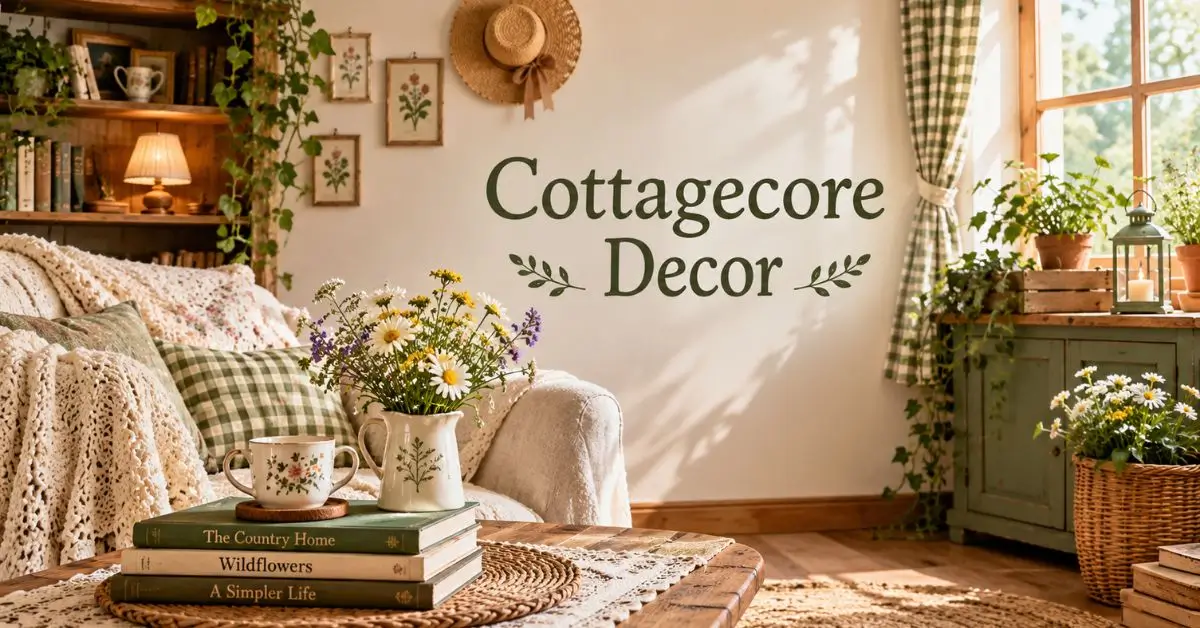
Cottagecore decor is an interior design style inspired by rural life, traditional crafts, and vintage nostalgia. It emphasizes natural materials like wood and stone, floral patterns, soft earthy color palettes, botanical elements, and cozy vintage furnishings. The goal is to create a warm, comforting home environment that feels connected to nature and simpler, slower living traditions.
In this guide, you will learn how to bring this comforting aesthetic into every room of your house. We will cover color palettes, furniture selection, lighting tricks, and practical thrifting tips so you can achieve the look on any budget.
Quick Summary
Focus on warmth, nostalgia, and nature. Use soft earth tones like sage green, mustard, and cream. Layer vintage wooden furniture with floral textiles, lace, and chunky knit blankets. Add dried herbs, indoor plants, and warm lighting to make any room feel peaceful and lived-in.
What Is the Cottagecore Aesthetic?
At its core, this design movement is about romanticizing everyday rural life. It draws heavy inspiration from classic storybooks, traditional English cottages, and simple farmhouse living.
Instead of hiding every household item behind closed cabinets, this style celebrates functional daily objects. A row of ceramic mugs hanging from brass hooks, a wooden bowl filled with fresh apples on the counter, or a stack of worn hardback novels on a side table all serve as natural decoration.
The look is deliberately imperfect. Scratched wood tables, mismatched tea sets, and vintage quilts with visible stitching add charm rather than flaws. It rejects mass-produced, disposable home goods in favor of pieces that feel meaningful, historic, and built to last.
Core Elements of the Style
Before you begin decorating, it helps to understand the main building blocks that give this style its signature warmth.
1. Natural and Earthy Color Palettes
The foundation starts with paint and background colors. Bright neons and cold blue-grays do not fit this look. Instead, build your room around colors you see in the countryside:
- Warm neutrals: Cream, oatmeal, buttermilk yellow, and soft linen.
- Earthy greens: Sage, moss green, and muted olive.
- Soft accents: Dusty rose, terracotta, warm ochre, and faded sky blue.
2. Time-Worn Materials
Texture plays a major role in creating a cozy atmosphere. Look for materials that show natural grain and texture:
- Solid pine, oak, or walnut wood with visible knots.
- Wicker, rattan, and woven seagrass storage baskets.
- Cast iron, antique brass, and brushed bronze hardware.
- Exposed brick or painted wooden beadboard paneling.
3. Floral and Nostalgic Patterns
Patterns bring life and movement to walls and upholstery. Small-scale floral prints, classic gingham checks, soft stripes, and vintage botanical illustrations help tie spaces together. The secret is to keep the background colors soft so multiple patterns can live together without clashing.
Living Room Styling: Cozy, Nostalgic, and Lived-In
Adding cottagecore decor to a living room is all about building layers of comfort that invite people to sit down and relax.
Focus on Soft, Inviting Seating
Your sofa should feel comfortable above all else. A slipcovered sofa in neutral cotton or soft linen works exceptionally well because it can be easily washed. If buying a new sofa is not in your budget, drape a floral quilt or a chunky knit throw blanket across your existing couch. Add three or four throw pillows made from velvet, linen, and floral tapestry fabrics.
Mix Mismatched Wooden Tables
Avoid buying a matching three-piece coffee and end table set from a modern showroom. Instead, hunt for an old wooden chest, a rustic pine bench, or an antique tea cart to use as a coffee table. Mismatched wood tones add history and depth to the room.
Create Warm, Diffused Lighting
Overhead lighting should be kept to a minimum in the evenings. Place small table lamps with pleated fabric or ceramic bases around the room. Use warm LED bulbs rated at 2700K. Scatter unscented beeswax candles or taper candles in brass candlesticks along the mantelpiece or windowsill for a soft evening glow.
Decorate with Books and Greenery
Line your bookshelves with vintage hardcovers, thrifted ceramic figurines, and small potted plants. English ivy, golden pothos, and Boston ferns trail over shelf edges beautifully. Hang framed botanical prints or landscape paintings in thrifted gilt frames on blank walls at eye level.
Kitchen and Dining: Functional Rustic Warmth
The kitchen is often called the heart of the home, and it is where this aesthetic shines brightest.
When applying cottagecore decor in a kitchen, think about bringing useful items out onto open displays rather than hiding them behind plain cabinet doors.
Open Shelving and Plate Displays
Remove the doors from two upper cabinets or install a pair of solid wood floating shelves. Use these shelves to store stacks of cream ceramic plates, vintage floral teacups, and clear glass jars filled with flour, rolled oats, and loose-leaf tea. This turns daily cooking essentials into decorative features.
Practical Textile Details
Small fabric choices change the feel of a kitchen instantly:
- Replace plastic paper towel holders with hanging cloth tea towels in gingham or linen.
- Add a small cafe curtain over the kitchen sink using a lightweight floral fabric.
- Place a woven jute runner rug in front of the sink or stove to warm up cold tile floors.
Copper, Brass, and Cast Iron Accents
Hang a few copper pans, cast iron skillets, or antique metal measuring cups from a simple iron rail on the wall. A vintage wooden bread box on the counter, paired with a small vase of dried lavender or chamomile, creates a sweet focal point beside the cutting board.
Bedroom: Soft Florals and Calming Textures
Creating a calming sanctuary with cottagecore decor begins with the bed, which should look like a cloud of soft, layered fabrics.
Layered Vintage Bedding
Start with crisp white or cream percale cotton sheets. Layer on a lightweight duvet covered in a subtle micro-floral print, and fold an authentic patchwork quilt across the bottom third of the bed. A ruffled bed skirt hides under-bed storage boxes while adding a classic country touch.
Bed Frame Choices
Traditional wrought iron frames, wooden spindle beds, or curved cane headboards fit this aesthetic best. If you currently have a basic metal platform frame, you can mount an old wooden mantel or an antique paneled door flat against the wall behind your mattress to act as a custom headboard.
Nightstand Styling
Keep your bedside table simple and practical. A small wooden stool or antique side table works well. Top it with a mini reading lamp, an enamel mug holding your pens, a journal, and a small glass carafe of water.
Window Treatments
Hang airy lace panels or semi-sheer linen curtains that allow morning sunlight to filter gently into the room. If privacy is a concern, layer sheer curtains over classic wooden Roman shades.
Bathroom and Small Spaces: Simple Rural Touches
Even a compact powder room or a tight entryway can take on a quaint cottage feel with a few quick adjustments.
In the bathroom:
- Replace sterile plastic soap dispensers with amber glass pump bottles.
- Roll up plush white bath towels and store them inside a woven wicker basket next to the tub.
- Hang a vintage, ornate mirror above the sink instead of using a standard frameless glass sheet.
- Place a small wooden stool beside the bathtub to hold bath salts, a natural sea sponge, and a small candle.
In small entryways or hallways:
- Install a wooden wall peg rail painted in soft sage green.
- Hang a wide-brim straw hat, a canvas market tote bag, and a lightweight cardigan on the pegs.
- Place a small wooden bench underneath for slipping shoes on and off.
Style Comparison: Cottagecore vs. Other Rustic Aesthetics
To understand how cottagecore decor compares to other rustic interior styles, review the design traits in the table below:
| Feature | Cottagecore | Modern Farmhouse | Traditional Vintage |
|---|---|---|---|
| Primary Vibe | Whimsical, nostalgic, cozy | Clean, practical, updated | Formal, historic, structured |
| Main Colors | Sage green, cream, mustard, rose | Bright white, black, charcoal gray | Deep burgundy, navy, mahogany |
| Pattern Focus | Micro-florals, gingham, botanicals | Buffalo check, typography, solids | Damask, stripes, paisleys |
| Furniture Style | Mismatched, antique, painted wood | Industrial metal, clean lines, shiplap | Dark polished woods, heavy ornate trim |
| Key Accessories | Dried flowers, books, teacups, quilts | Metal signs, galvanized buckets, wire baskets | Antique portraits, heavy crystal, clocks |
How to Source Decor on a Budget
You do not need an antique shop budget to collect cottagecore decor items for your home. In fact, buying brand new replica items from big-box stores often looks too artificial. The most authentic pieces are pre-owned.
1. Thrift Stores and Yard Sales
Spend Saturday mornings exploring local charity shops, estate sales, and neighborhood yard sales. Keep an eye out for:
- Framed landscape prints and cross-stitch art.
- Solid wood picture frames that can be cleaned or painted.
- Milk glass vases, amber bottles, and floral teapots.
- Handmade crochet doilies, runners, and woven baskets.
2. DIY and Botanical Foraging
Nature provides some of the best decorative elements for free. Clip wild branches, fern fronds, or wildflowers from your garden or public walking trails. Hang bundles of rosemary, lavender, or eucalyptus upside down in your kitchen with twine to dry. They look charming while filling the house with a pleasant herbal scent.
Press fresh flowers between the pages of heavy books for two weeks, then arrange them inside glass float frames for inexpensive botanical wall art.
3. Upcycling Old Furniture
If you have a plain or dated wooden dresser, sand it down and apply two coats of milk paint in a soft shade like duck egg blue or butter yellow. Lightly scuff the edges with fine-grit sandpaper to give it an authentic aged finish, then replace the modern knobs with antique brass pulls.
Avoiding Common Mistakes: Cozy vs. Cluttered
One common issue with cottagecore decor is crossing the line from cozy to cluttered. Because this style celebrates collections, books, and knick-knacks, rooms can quickly feel crowded if you do not edit your displays.
Keep these practical rules in mind:
Leave Breathing Room on Surfaces
Every table, shelf, and countertop does not need to be covered in items. Leave at least one-third of every flat surface completely clear. This gives the eye a place to rest and keeps the room feeling organized.
Group Items in Clusters
Instead of scattering small objects individually across a room, gather them into small vignettes of three. For example, place a small brass candlestick, a potted succulent, and two stacked books together on a small wooden tray. This makes your collection look curated rather than messy.
Balance Vintage Pieces with Modern Function
Do not sacrifice everyday comfort for the sake of aesthetics. You can keep your modern television, laptop, and kitchen appliances. Simply tuck cords into woven cable boxes, store remotes in an antique wooden box, and balance modern electronics with warm textiles nearby.
Real-World Example: A 2-Bedroom Suburban Home in Ohio
To see how these principles work in practice, consider a recent home update in Dayton, Ohio. The homeowner wanted to warm up a sterile, builder-grade rental home without losing their security deposit.
Here is how the space was transformed for under $300:
- Textiles ($90): Bought two thrifted cotton quilts and four floral linen cushion covers for the living room couch.
- Lighting ($65): Replaced two harsh 5000K daylight ceiling bulbs with warm 2700K floor and table lamps found at garage sales.
- Wall Displays ($45): Gathered six thrifted wood frames, painted them in matching warm cream, and inserted pressed botanical prints.
- Kitchen Details ($35): Replaced stainless steel dish soap bottles with amber glass dispensers and hung a checked tea towel over the oven handle.
- Natural Accents ($0): Foraged dried branches and dried hydrangeas from the backyard to fill two ceramic pitchers on the dining table.
The simple adjustments completely changed the feel of the house, turning a plain rental into a warm, character-filled cottage retreat.
Frequently Asked Questions
What colors are best for a cottagecore aesthetic?
The best cottagecore colors include sage green, creamy white, dusty rose, warm taupe, soft yellow, and terracotta. These earthy, muted shades create a warm and natural countryside feel.
How can I style cottagecore decor in a modern apartment?
Add cottagecore decor with floral textiles, linen curtains, woven baskets, plants, and small vintage accents. Warm lighting and natural wood pieces can add cottage charm without making permanent changes.
What is the difference between cottagecore and farmhouse decor?
Cottagecore focuses on vintage details, floral patterns, soft colors, and romantic countryside charm. Farmhouse decor typically uses neutral colors, rustic materials, and simpler modern elements.
How do you create a cottagecore bedroom on a budget?
Use thrifted quilts, floral bedding, lace curtains, vintage frames, and botanical prints to create a cottagecore bedroom on a budget. Warm lighting and secondhand furniture can add character without major costs.
Are indoor plants important for cottagecore decor?
Yes, indoor plants help create the natural, cozy look associated with cottagecore decor. Ferns, ivy, herbs, and fresh or dried flowers are popular choices.