

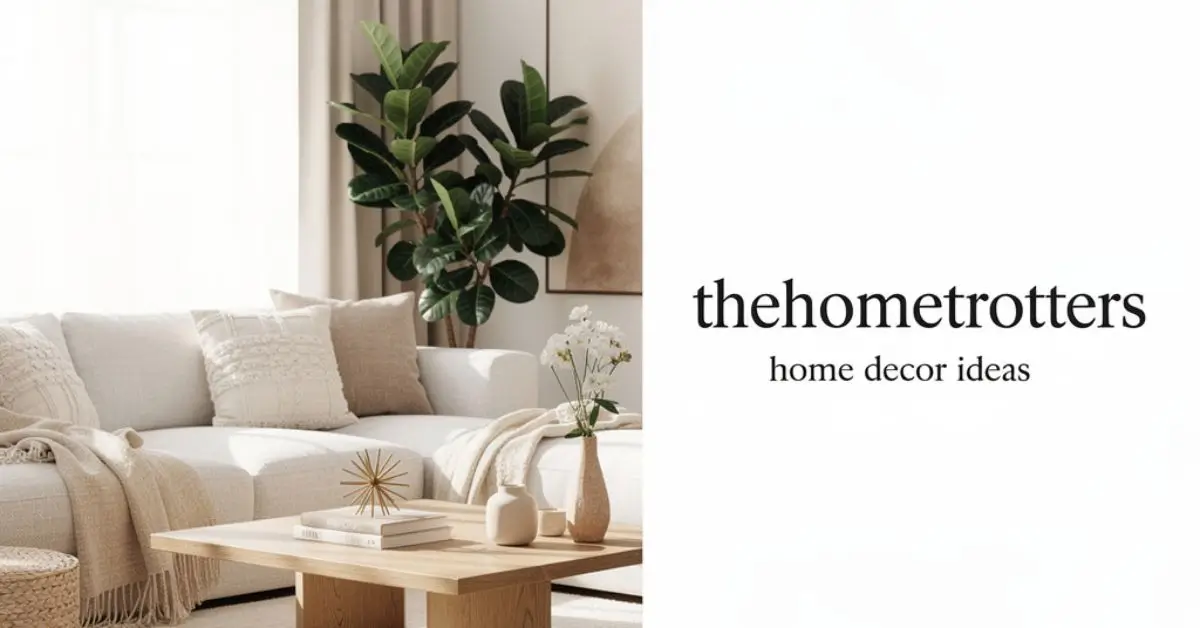
Why Home Decor Feels Harder Than It Should
Most people want a home that looks and feels good. That is a simple, universal desire. But turning that desire into action — making actual changes that produce a real, visible improvement — is where most homeowners get stuck.
The usual experience goes like this: you spend time scrolling through home decor content, save dozens of ideas that look beautiful, feel genuinely inspired — and then walk into your own living room and feel no closer to knowing what to do. The inspiration does not translate. The ideas that look so clear in a styled photograph become confusing when you try to apply them to a space with existing furniture, awkward proportions, and a realistic budget.
The problem is not a lack of ideas. It is a lack of a clear, practical framework that connects decorating concepts to real decisions in real homes.
TheHomeTrotters home decor ideas refer to the home styling and decorating content curated through TheHomeTrotters platform — a home improvement resource that focuses on helping everyday homeowners apply practical, modern decorating principles to their living spaces. The content covers room-specific styling ideas, color and material guidance, furniture arrangement strategies, lighting improvements, and budget-conscious approaches to creating homes that feel genuinely designed — accessible to homeowners across different experience levels and budget ranges.
Quick Summary
This guide covers the most valuable home decor ideas from TheHomeTrotters approach — organized by room and principle, explained with real examples, and grounded in what genuinely works for average American homes at different budget levels.
What Makes Home Decor Ideas Actually Worth Following
Before getting into specific ideas by room, it is worth understanding what separates genuinely useful decorating guidance from the kind that looks helpful but produces no real change.
Useful home decor ideas share three characteristics.
They explain the principle, not just the outcome. Showing you a beautifully styled bookshelf is inspiration. Explaining that the shelf looks designed because it mixes books with objects of varying height, uses a limited color palette, and leaves breathing space between groupings — that is instruction. Instruction is what you can actually use.
They respect real constraints. Most homeowners are working with existing furniture, budget limits, rental restrictions, and rooms that are not perfectly proportioned. Decor ideas that only work in a blank-canvas space with unlimited funds help almost no one.
They give clear priorities. Not all decor changes have equal impact. Knowing which changes deliver the most visible improvement per dollar and per hour of effort helps you make better decisions — especially when time and money are limited.
TheHomeTrotters home decor ideas consistently apply these characteristics — which is what makes them worth applying to your own home rather than just admiring online.
Living Room Decor Ideas That Make an Immediate Difference
The living room is where most homeowners want to start — and for good reason. It is the most-seen social space in any home, and the one where design decisions have the most visible daily impact.
Get the Furniture Arrangement Right First
Before buying anything new, rearrange what you already have. Most living rooms suffer from the same layout mistake: all furniture pushed against the walls, leaving an empty void in the middle of the room and seating that is too spread apart for comfortable conversation.
Pull seating pieces away from the walls and orient them toward each other around a central focal point — a coffee table, a fireplace, or a rug. This creates a connected conversation zone that feels deliberate and designed.
A homeowner in Portland rearranged her living room using this principle — pulling her sofa and two armchairs into a triangle arrangement around the coffee table — and described it as feeling like a completely different, more expensive room without spending a dollar. This is the highest-impact zero-cost change available in any living room.
Layer Your Lighting
If your living room has one overhead light and nothing else, fixing that is the single most impactful improvement you can make. One ceiling light creates flat, institutional illumination. Adding a floor lamp in a dark corner and a table lamp on a side table creates warmth, depth, and the kind of layered light that makes a room feel genuinely inviting.
Floor lamps start at $40 to $80 for quality options that do not look cheap. Table lamps with warm-toned bulbs add similar warmth for similar investment. A dimmer switch — $15 to $25 — allows you to adjust the mood instantly between bright and soft.
This is the change that most dramatically separates rooms that look professionally designed from rooms that just look furnished.
Anchor the Space With a Properly Sized Rug
The most common and most fixable rug mistake in American living rooms is choosing a rug that is too small. A rug that sits only under the coffee table, surrounded by furniture that floats on bare floor, makes the room look unfinished — like the rug was an afterthought rather than a design foundation.
The right size for a typical US living room is 8×10 feet as a minimum. All front furniture legs — or ideally all legs — should rest on the rug. This anchors the seating arrangement, defines the zone, and gives the room the visual organization it needs.
If your current rug is too small, replacing it with a properly sized one — available from $100 to $350 for quality mid-range options — will immediately make your entire living room look more intentional.
Bedroom Decor Ideas for Rest and Style
The bedroom serves two purposes simultaneously: it needs to feel beautiful and it needs to support quality sleep. The best bedroom decor ideas address both together rather than prioritizing one at the expense of the other.
Invest in the Bed — It Is the Room’s Focal Point
Every design decision in a bedroom should support the bed as the visual anchor. A substantial headboard against the main wall, coordinated bedding in quality materials, and layered pillows — sleeping pillows, shams, and two or three decorative cushions — transform a bed from a sleeping surface into the centerpiece the room needs.
You do not need expensive designer bedding. Clean, coordinated cotton or linen in quality neutrals — cream, warm white, soft sage — looks better than cheap patterned sets regardless of price. A duvet cover, matching shams, and a throw at the foot of the bed is the formula that works consistently.
Control the Light — For Sleep and Style
Bedrooms need two distinct light conditions: natural light during the day and darkness at night for quality sleep. Most bedrooms achieve neither well.
Blackout curtains hung close to the ceiling and extending well beyond the window frame on both sides solve the darkness problem while also making the window look larger and the ceiling higher. Layer sheer panels in front for soft diffused light during the day. This combination — sheers plus blackout drapes — is the professional standard for bedroom windows.
The visual improvement is significant. Properly hung floor-length curtains make any bedroom look more designed, more intentional, and more complete.
Clear Your Surfaces Deliberately
Visual clutter on bedroom surfaces — nightstands piled with objects, dressers covered in miscellaneous items — directly affects how restful the room feels, even when you are not consciously noticing it.
Remove everything from nightstands and dressers. Return only what genuinely belongs: a lamp, one book, a small plant, perhaps a glass of water. This deliberate surface editing is one of the most impactful changes in any bedroom — and it costs nothing.
Kitchen Decor Ideas Without Full Renovation
The kitchen is the most expensive room to renovate comprehensively. But several targeted changes produce significant visual improvement without touching the structure.
Replace Cabinet Hardware
Builder-grade cabinet pulls and knobs are almost universally generic and cheap-looking. Replacing them with brushed brass, matte black, or satin nickel hardware takes one afternoon and costs $50 to $200 depending on cabinet count.
The visual transformation is disproportionate to the cost. Updated hardware makes even dated cabinets look more considered and current. This is the highest-return kitchen decor upgrade available for budget-conscious homeowners.
Style Open Shelves With Intention
If your kitchen has open shelving — or if you are considering adding some — the styling makes the difference between a focal point and a cluttered wall.
The principle is simple: mix functional items — dishes, glasses, oils — with a few decorative objects at varying heights. Use a limited palette — mostly white or neutral items with one or two accent pieces. Leave breathing space between groupings. The result looks curated rather than stored.
Add Task and Accent Lighting
Under-cabinet lighting illuminates the countertop workspace and makes a kitchen look significantly more modern and polished, particularly in the evening. LED strip lights that require no electrical work start at $25 to $50 for a standard kitchen and install in under an hour.
Bathroom Decor Ideas for Immediate Impact
Bathrooms are small spaces where finish quality is immediately apparent and small changes produce outsized visual results.
Unify Your Metal Finishes
If your towel bars, toilet paper holder, faucet, and shower hardware are different finishes — some chrome, some brushed nickel, some oil-rubbed bronze — the bathroom will feel visually disjointed regardless of cleanliness. Replacing these with a single consistent finish creates instant cohesion.
Matte black, brushed brass, and brushed nickel are the most current choices for US bathrooms. Replacing three or four fixtures in a matching finish costs $60 to $150 and takes one weekend afternoon.
Fresh Towels and Bath Mat as Decor
Worn, thin, or color-mismatched towels make any bathroom look neglected. A matched set of quality towels in a single neutral tone — folded and displayed rather than piled — changes the room’s atmosphere immediately.
This is a $30 to $60 investment with immediate, visible return. It is one of the simplest TheHomeTrotters home decor ideas for bathrooms and one of the most consistently effective.
Decor Ideas for Entryways and Transitional Spaces
The entryway is the first space anyone experiences when they enter your home. It sets the tone for everything beyond it — and it is consistently neglected in home decorating plans.
A console table with a mirror above it, a small lamp, and a tray for keys and mail creates an immediate sense of arrival and organization. Add a hook system or small coat rack for functional storage, and a small plant or vase for life and color.
Even in tight entryways — a narrow hallway or a small landing — a mirror and proper lighting create the perception of more space and warmth that makes a strong first impression.
A Quick Reference: Decor Ideas by Impact and Cost
| Decor Idea | Room | Cost Range | Visual Impact | DIY Friendly |
|---|---|---|---|---|
| Furniture rearrangement | Living room | $0 | Very High | Yes |
| Add layered lighting | Any room | $60–$200 | Very High | Yes |
| Properly sized area rug | Living room | $100–$350 | High | Yes |
| Quality coordinated bedding | Bedroom | $80–$180 | High | Yes |
| Blackout curtains — ceiling hung | Bedroom | $60–$150 | High | Yes |
| Surface decluttering | Any room | $0 | High | Yes |
| Cabinet hardware replacement | Kitchen | $50–$200 | High | Yes |
| Under-cabinet lighting | Kitchen | $25–$60 | High | Yes |
| Unified bathroom fixtures | Bathroom | $60–$150 | High | Yes |
| Entryway console and mirror | Entryway | $80–$250 | High | Yes |
Home Decor Mistakes Worth Avoiding
Honest guidance includes knowing what not to do — because some of the most common decor decisions actively make homes look worse rather than better.
Buying matching furniture sets. Showroom matching sets look coordinated in the store and look flat in a real home. Mixing pieces that relate through material and color — but are not identical — creates more visual interest and a more personal result.
Chasing trends for large, expensive items. A trendy sofa color or a statement piece that reflects this year’s design moment will look dated in two to three years. Invest in timeless choices for large furniture and use easily swappable soft furnishings — cushions, throws, rugs — to reflect current trends affordably.
Over-decorating to compensate for layout problems. Adding more decor to a poorly arranged room does not fix the arrangement. Fix layout and lighting first, then layer decor on top of a working foundation.
Ignoring scale. Small art on large walls, tiny rugs on big floors, and undersized furniture in spacious rooms all look wrong for the same reason: scale mismatch. Getting proportion right is more important than any individual piece’s quality or beauty.
Conclusion
Good home decorating is not about having the most beautiful individual pieces or following the latest trends perfectly. It is about making intentional, connected decisions that work together to create a space that feels genuinely like yours — comfortable, cohesive, and considered.
TheHomeTrotters home decor ideas serve a real purpose in helping homeowners move from inspiration to action — providing the framework that turns beautiful images into practical decisions you can actually make in your own home. Used alongside honest assessment of your space, clear priorities, and realistic budget planning, that guidance produces real results.
Start with one room. Fix the layout. Layer the lighting. Get the rug size right. Add quality soft furnishings in a cohesive palette. Then move to the next room with the confidence that comes from seeing a change that genuinely worked.
If this guide gave you a clearer starting point and a more confident direction for your home, explore more room-specific decor guides and styling tips to keep building the home you actually want to live in.
Frequently Asked Questions
What are the best TheHomeTrotters home decor ideas for beginners?
Start with furniture rearrangement, layered lighting, a properly sized rug, and decluttering. These simple changes make a big difference.
How can I decorate my home on a budget?
Rearrange furniture, add lamps, replace cabinet hardware, and use cushions or curtains for an affordable refresh.
What is the most important home decor principle?
Create visual cohesion with a consistent color palette, matching materials, and balanced furniture placement.
How do I choose a home decor style?
Save photos of rooms you like, identify common themes, and use those patterns to guide your decorating choices.
How often should I update my home decor?
Keep major furniture for years and refresh smaller items like cushions, throws, and accessories seasonally.